
Carina Nebula ~ Credit: NASA, ESA, and M. Livio and the Hubble 20th Anniversary Team (STScI)
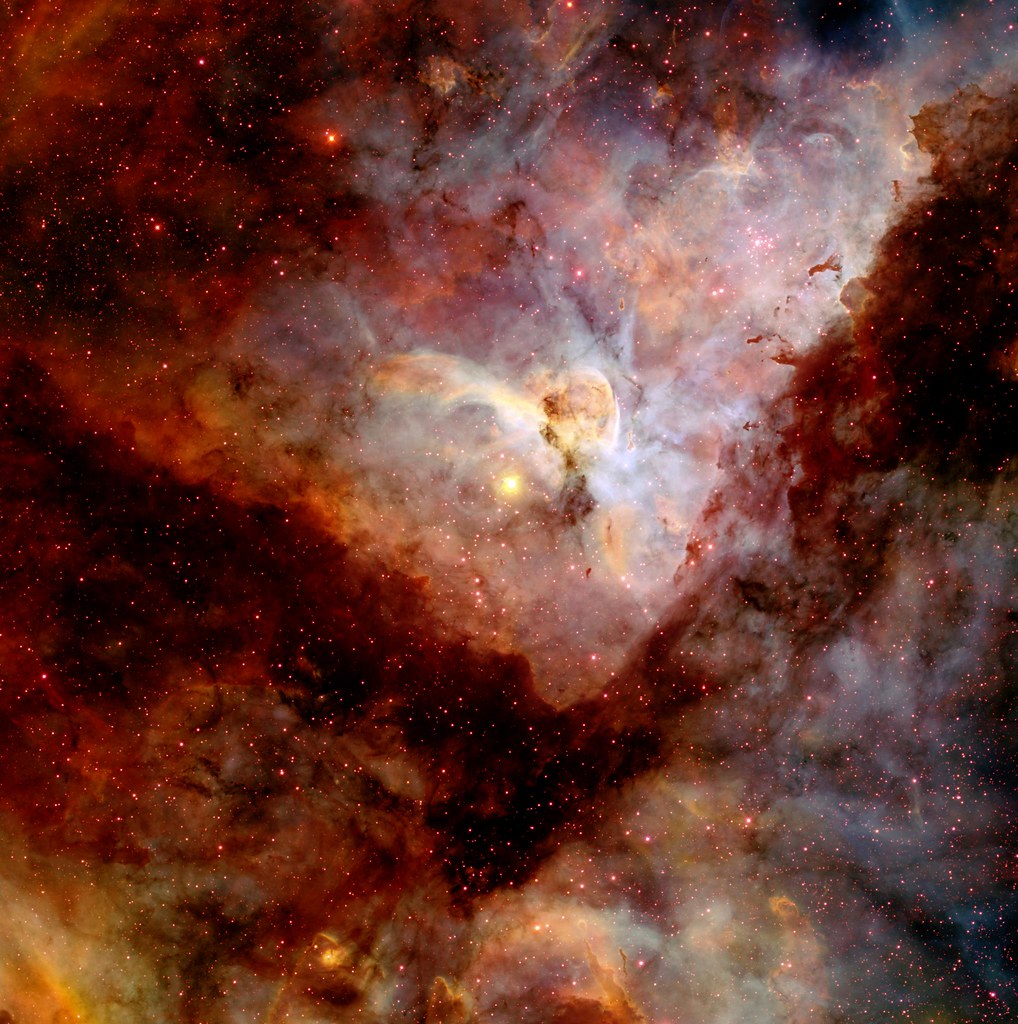
Carina Nebula, NGC 3372 ~ Credit: NASA/N. Smith (University of California, Berkeley) and NOAO/AURA/NSF

Carina Nebula ~ Credit for Hubble Image: NASA, ESA, N. Smith (University of California, Berkeley), and The Hubble Heritage Team (STScI/AURA); Credit for CTIO Image: N. Smith (University of California, Berkeley) and NOAO/AURA/NSF

Carina Nebula ~ Credit: NASA, ESA, and M. Livio and the Hubble 20th Anniversary Team (STScI)

Supernova remnant from SN 1006 ~ Credit: NASA, ESA, and Z. Levay (STScI); Science Credit, Radio: NRAO/AUI/NSF GBT+VLA 1.4 GHz mosaic (Dyer, Maddalena and Cornwell, NRAO); X-ray: NASA/CXC/Rutgers/G. Cassam-Chenai and J. Hughes et al., and Optical: F.Winkler/Middlebury College and NOAO/AURA/NSF; and DSS

Starburst cluster in the Carina Nebula ~ Credit: NASA, ESA, R. O’Connell (University of Virginia), F. Paresce (National Institute for Astrophysics, Bologna, Italy), E. Young (Universities Space Research Association/Ames Research Center), the WFC3 Science Oversight Committee, and the Hubble Heritage Team (STScI/AURA)

The Tarantula Nebula ~ Credit: NASA/ESO, J. Alves (Calar Alto, Spain), and B. Vandame and Y. Beletski (ESO)
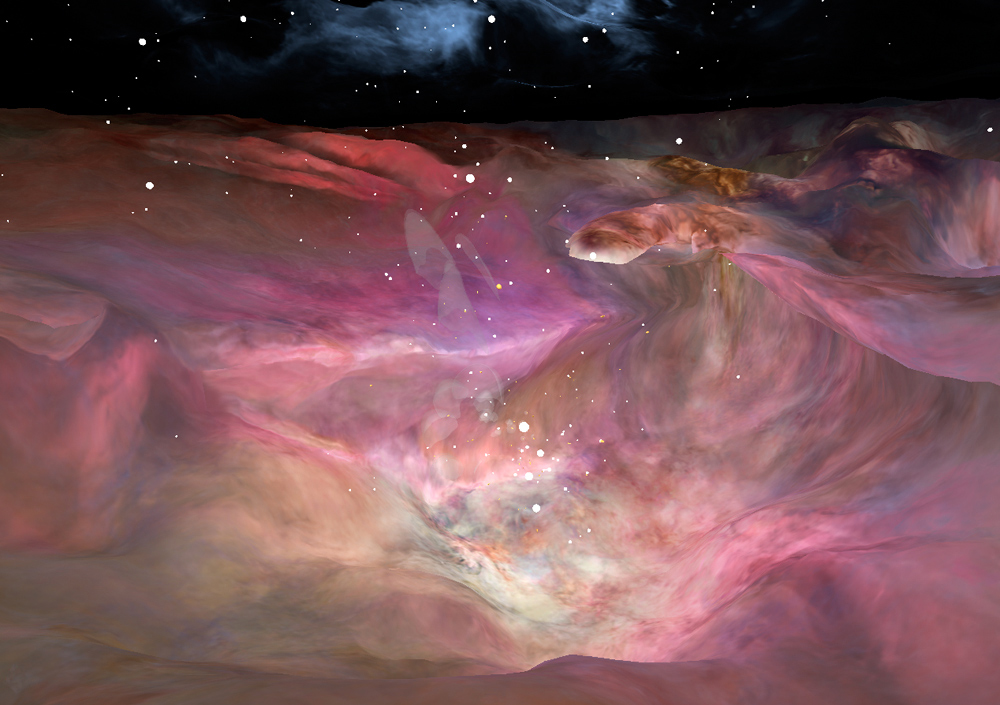
Vast canyon of dust and gas in the Orion Nebula ~ Credit: NASA, G. Bacon, L. Frattare, Z. Levay, and F. Summers (STScI/AURA)

NGC 1068, one of the nearest and brightest galaxies contains a rapidly growing supermassive black hole. Credit: X-ray (NASA/CXC/ MIT/C.Canizares, D.Evans et al), Optical (NASA/STScI), Radio (NSF/ NRAO/VLA)

Jupiter’s New Red Spot ~ Credit: M. Wong and I. de Pater (University of California, Berkeley)

Jupiter, the largest planet ~ Credit: NASA, ESA

Jupiter and its largest moon ~ Credit: NASA, ESA, and E. Karkoschka (University of Arizona)

Carina Nebula Details: The Caterpillar ~ Credit for Hubble Image: NASA, ESA, N. Smith (University of California, Berkeley), and The Hubble Heritage Team (STScI/AURA); Credit for CTIO Image: N. Smith (University of California, Berkeley) and NOAO/AURA/NSF

Cat’s Eye Nebula ~ Credit: NASA, ESA, HEIC, and The Hubble Heritage Team (STScI/AURA); Acknowledgment: R. Corradi (Isaac Newton Group of Telescopes, Spain) and Z. Tsvetanov (NASA)

Cassiopeia, A supernova ~ Credit: NASA/DOE/Fermi LAT Collaboration, CXC/SAO/JPL-Caltech/Steward/O. Krause et al., and NRAO/AUI

The Bug Nebula ~ Credit: NASA, ESA and A.Zijlstra (UMIST, Manchester, United Kingdom)

“Light Echo” Illuminates Dust Around Supergiant Star V838 Monocerotis (V838 Mon). Credit: NASA and The Hubble Heritage Team (AURA/STScI)

Barred Spiral Galaxy, NGC 6217 ~ Credit: NASA, ESA, and the Hubble SM4 ERO Team

Stellar Demise in Planetary Nebula NGC 6302 ~ Credit: NASA, ESA, and the Hubble SM4 ERO Team

The Antennae galaxies, located about 62 million light-years from Earth, are colliding. Credit: NASA, ESA, SAO, CXC, JPL-Caltech, and STScI

Spiral galaxy NGC 3982 is located about 68 million light-years away in the constellation Ursa Major. Credit: NASA, ESA, and the Hubble Heritage Team (STScI/AURA); Acknowledgment: A. Riess (STScI)

Whirlpool Galaxy, spiral galaxy M51 ~ Credit: NASA, ESA, M. Regan and B. Whitmore (STScI), and R. Chandar (University of Toledo)

Whirlpool Galaxy, spiral galaxy M51 ~ Credit: NASA, ESA, S. Beckwith (STScI), and the Hubble Heritage Team (STScI/AURA)

Pair of interacting galaxies called Arp 273. The larger of the spiral galaxies, known as UGC 1810, has a disk that is distorted into a rose-like shape by the gravitational tidal pull of the companion galaxy below it, known as UGC 1813. Credit: NASA, ESA, and the Hubble Heritage Team (STScI/AURA)

A kind of supernova called a Type Ia created a remnant named SNR 0509-67.5, which lies 170,000 light-years away in the Large Magellanic Cloud galaxy. Credit: NASA, ESA, CXC, SAO, the Hubble Heritage Team (STScI/AURA), and J. Hughes (Rutgers University)

The Crab Nebula ~ Credit: NASA, ESA, J. Hester and A. Loll (Arizona State University)

Heavyweight of the Leo Triplet ~ Credit: NASA, ESA and the Hubble Heritage (STScI/AURA)-ESA/Hubble Collaboration. Acknowledgement: Davide De Martin and Robert Gendler

Bubbles And Baby Stars ~ Credit: NASA, ESA and Jesús Maíz Apellániz (Instituto de Astrofísica de Andalucía, Spain)

Star-forming region NGC 2467 is a vast cloud of gas, mostly hydrogen, that serves as an incubator for new stars. Credit: NASA, ESA and Orsola De Marco (Macquarie University)

Galaxy NGC 4911 in the Coma Cluster, a collection of almost 1,000 galaxies. Credit: NASA, ESA, and the Hubble Heritage Team (STScI/AURA)

Supernova 1987A Trace Shock Wave ~ Credit: NASA, ESA, K. France (University of Colorado, Boulder), and P. Challis and R. Kirshner (Harvard-Smithsonian Center for Astrophysics)

Lagoon Nebula ~ Credit: NASA, ESA

Spiral Galaxy NGC 2841 lies 46 million light-years away in the constellation of Ursa Major (The Great Bear). Credit: NASA, ESA, and the Hubble Heritage (STScI/AURA)-ESA/Hubble Collaboration; Acknowledgment: M. Crockett and S. Kaviraj (Oxford University, UK), R. O’Connell (University of Virginia), B. Whitmore (STScI), and the WFC3 Scientific Oversight Committee

This bubble of gas, called SNR 0509-67.5, is the remnant of a supernova in the Large Magellanic Cloud, a galaxy about 160,000 light-years from Earth. Credit: NASA, ESA, and the Hubble Heritage Team (STScI/AURA); Acknowledgment: J. Hughes (Rutgers University)
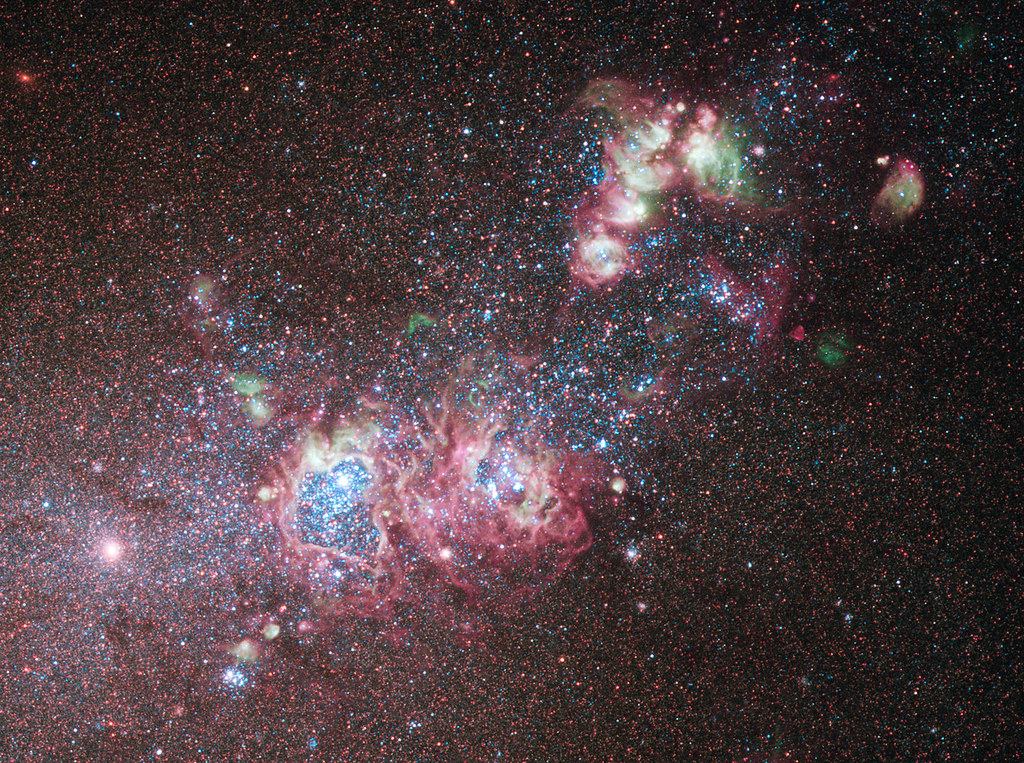
The dwarf galaxy NGC 4214 is ablaze with young stars and gas clouds. It is located about 10 million light-years away in the constellation of Canes Venatici (The Hunting Dogs). Credit: NASA, ESA, and the Hubble Heritage (STScI/AURA)-ESA/Hubble Collaboration

Time-lapse picture of supersonic jets of gas from newly formed stars ~ Credit: NASA, ESA, and P. Hartigan (Rice University)

The bipolar star-forming region, called Sharpless 2-106, looks like a celestial snow angel. Twin lobes of super-hot gas, the “wings” in this image, stretch outward from the central star. Credit: NASA, ESA, and the Hubble Heritage Team (STScI/AURA)

Eta Carinae, a binary star system, and the Homunculus Nebula ~ Credit: ESA/NASA
The Hubble Space Telescope is a project of international cooperation between NASA and the European Space Agency. NASA’s Goddard Space Flight Center manages the telescope. The Space Telescope Science Institute conducts Hubble science operations. For more information about any image, please click on it. Live long and prosper. ~ Laura
